- to simply be aware of the psychological phenomenon of social identity and ‘them’ and ‘us’ thinking
- is to make employees feel as if they are part of a clear company mission or goal - that there is a shared identity
- is for people to see themselves as part of a group even if the group is subdivided by function or responsibility and to accept that sub-cultures are a natural outcome of large groups
- to make the conscious effort to cooperate and communicate in order to overcome natural group dysfunctions and biases
15. august 2014
THE DANGER TO TEAMS: ’THEM’ AND ‘US’ THINKING
1. august 2014
MAKING DECISIONS WITH YOUR GUT
There is an incredibly large gap between what your brain knows and what your mind is capable of accessing. You are not aware of most of the inner workings of your brain and simply have no way to consciously access it. To be quite frank you would not want to be able to consciously access the deeper processing of unconscious mind. Why is that?
If you play the game of golf the last thing you want to do is to over think the shot. The best course of action is to simply trust in your ability and swing the club. Leave any analysis of your shot until after you have hit the ball.
IMPLICIT MEMORIES
Skills such as swinging a golf club, singing the ABC’s, driving to work, signing your name, brushing your teeth or any number of other things you do throughout the day are called implicit memories. Simply put, an implicit memory is a type of memory for the performance of a particular sequence of action that doesn’t require you to consciously recall how to perform the skill. Although you can’t consciously recall implicit memories, they still have an influence on your decision-making and how you behave.
For example, if someone asked you to explain exactly how you made that perfect golf swing so they could repeat it, you would find it almost impossible to explain specifics of how you did it. The reason is there is a chasm between what your brain can do and what you are able to consciously connect to. That is to say your implicit memory of how you made the golf swing is not open to conscious introspection. They are completely separated from your explicit memories where you can intentionally remember something like a phone number or what happened to you last Saturday.
THE EXPERIMENT
Antoine Bechara and his fellow researchers conducted a fascinating experiment in 1997. Participants were presented with four decks of cards. They were also given 2000 ‘lab’ dollars and were asked to choose a card from any of the decks. Some of the cards gave an immediate reward increasing the amount of their lab dollars and other cards that carried a penalty decreasing the amount of lab dollars. Unbeknownst to the participants two of the decks were set up to be advantageous (i.e. contained more reward cards) and the two other decks that were disadvantageous (i.e. contained more penalty cards).
The researchers asked participants at fixed points for their opinion about each of the decks. That is, which of the decks did they feel were reward decks and which ones were the penalty decks. The researchers discovered it took about 25 draws of the cards for participants to consciously figure it out.
The astonishing part of the experiment came from the findings they collected when they measured skin conductance response (SCR) each time the participants drew a card. (Basically, a SCR measures a change in the electrical properties of the skin in response to stress or anxiety. The SCR indicates the activity of the autonomic nervous system - a part of the unconscious brain).
It took the unconscious brain on average 13 cards compared to the 25 cards of the conscious mind to figure out which decks were the penalty decks and which were the reward decks. So just before a participant drew a card from the penalty deck there was a SCR spike indicating a stress reaction. In other words, the unconscious brain figured out which decks were the penalty decks well before the conscious mind did.
THE UNCONSCIOUS VS. THE CONSCIOUS
The researchers’ findings suggested the feelings produced by physical states of the body come to guide behavior and decision making. For example, when some something happens to you your entire body reacts to the situation. There may be an increase in your heart rate, a tensing in your muscles, an increase in blood pressure, a contraction in your gut and so on. All of these bodily reactions become linked to the event - they get burned into your neural circuits and become an implicit memory. This means the next time you relive a similar event or something triggers the implicit memory, your brain will will fire-up the identical bodily reactions of the original event.
Just like the participant’s SCR response prior to picking up a card from the penalty deck, your implicit memories will know well before your conscious mind what is going on. The implicit memory triggers a feeling and unconsciously influences your decision-making and behavior
FLIP THE COIN
So how can you employ this knowledge to help you with your decision-making? The next time you find yourself at the crossroads of indecision pull a coin out of your pocket. Then assign each of your choices to either heads or tails. Flip the coin. The key here is to immediately assess your gut instinct after the flip. If there is a sense of relief from the coins result, then it will be the correct choice for you. If you feel uncomfortable with the result of the flip, most likely the other choice is better for you.
26. juli 2014
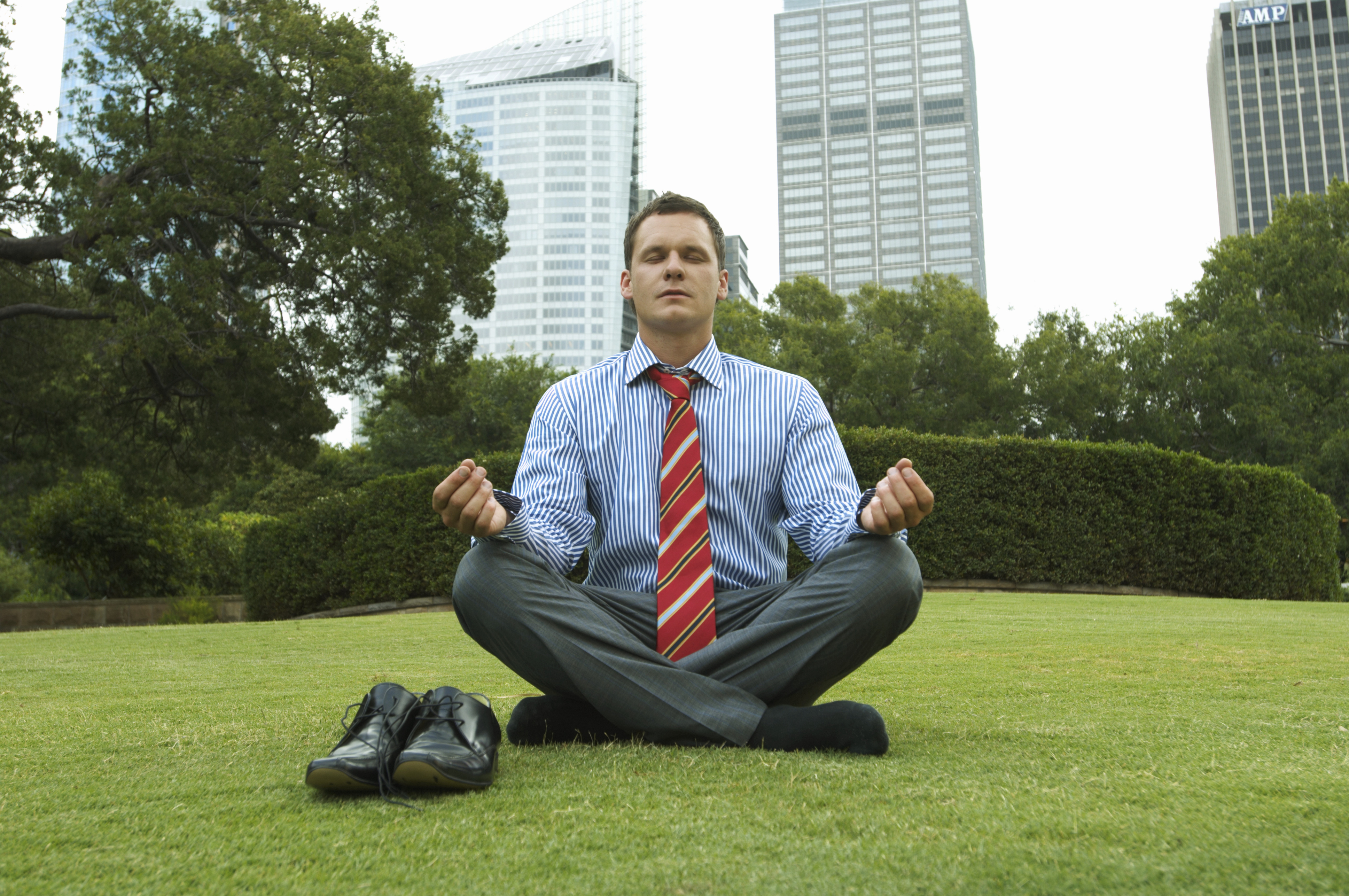
How to Quiet the Mind
Neuroscience tells us that, to be more productive and creative, we need to give our brains a break. It's the quiet mind that produces the best insights. But it's a challenge to take that sort of time off in the midst of a busy day. Here are three specific, quick, and easy ways to build purposeful break time into your day.
Quick Meditation
New research from the UCLA Laboratory of Neuro Imaging suggests that people who meditate show more gray matter in certain regions of the brain, show stronger connections between brain regions and show less age-related brain atrophy. In other words, meditation might make your brain bigger, faster, and "younger". As lead researcher Eileen Luders explains, "it appears to be a powerful mental exercise with the potential to change the physical structure of the brain."
Tip: If you commute via public transportation (or even if you're a passenger in a car pool) use the time to close your eyes for 10 minutes. If you drive, leave a little early, park, and spend 10 minutes in the car before you walk into work. Choose a very specific image, such as a waterfall, beach, or tree, and try to focus on it alone. If other thoughts get in the way, gently push them aside. Do this once or twice per day. The goal is to let your mind achieve a sense of relaxed awareness.
Pulsing
Psychologist K. Anders Ericsson, renown for his research and theories on expertise, points out that top performers in fields ranging from music to science to sports tend to work in approximately 90-minute cycles and then take a break. We are designed to pulse, to move between spending and renewing energy. Pulsing is the simplest, easiest, most immediate way to build breaks into your day.
Tip: Download a "break-reminder" utility, such as Scirocco or Healthy Hints, and set it to ping you every 90 minutes. Focus hard on a particular task until that cue. And then take a walk, talk to a colleague, doodle, or listen to music. Do anything that renews you and gives you a "second wind," even if you think you don't need it. You do. Five minutes later, get back to work.
Daydream Walks
Most people have heard the story about how 3M's Arthur Fry came up with the idea for the Post-it note: he was daydreaming in church. Jonathan Schooler, a researcher at UC Santa Barbara, has repeatedly shown that people like Fry who daydream and let their minds wander score higher on creativity tests. What separates this from meditation is that, instead of emptying your mind, you're letting it fill up with random thoughts. The trick is to remain aware enough to recognize a sudden insight when it comes.
Tip: Start by taking 20 minutes, two days a week during your lunch break to take a stroll and daydream. Think about anything you want besides work—a beach vacation, building your dream house, playing shortstop for the Yankees, whatever. Ramp it up to three or four days a week. The next time someone catches you daydreaming on the job and asks you why you're not working, tell them that in fact you're tapping into your creative brain.
12. juni 2014
THE NEUROSCIENCE BEHIND HOW SLEEP CLEANS YOUR BRAIN
We know that getting even a measly extra hour of sleep a night can havemajor benefits for us--like more memories, less anxiety, and happier genes. But scientists have tested another hypothesis for why we need to spend so much time horizontal: Sleep cleans our brains.
Ian Sample, the appropriately named science writer for the Guardian,summarizes the phenomenon this way:
Through a series of experiments on mice, the researchers showed that during sleep, cerebral spinal fluid is pumped around the brain, and flushes out waste products like a biological dishwasher.
The process helps to remove the molecular detritus that brain cells churn out as part of their natural activity, along with toxic proteins that can lead to dementia when they build up in the brain, the researchers say.
We might want to take these conclusions with a grain of cerebral salt, given that human brains are more mightily complex than those of mice. Still, the results are super fascinating. As published in the journal Science, University of Rochester professor Maiken Nedergaard led a team that found out that the brain cells of mice shrink while they sleep--creating a space between them that's 60% bigger, which allows for the cerebral spinal fluid in their brains to flow 10 times faster while sleeping than while waking.
Then they wanted to see how the mice brains did with toxins, so they injected them with proteins associated with Alzheimer's disease--and found the proteins were cleaned up faster in the brains of sleeping mice.
This is super fascinating because we've known about the effects of better sleep, like the memory consolidation that we need to remember our lives, but Nedergaard's research sheds light on the actual mechanics of what's happening while we're not waking. If the same holds true for humans, then sleep may be a key to fighting dementia and other degenerative diseases, since it's the time that your brain sweeps clean the toxins that are laying about.
"You can think of it like having a house party," Nedergaard said in a statement. "You can either entertain the guests or clean up the house, but you can't really do both at the same time."
The takeaway for us knowledge workers? If we want to keep our knowledge working--and staycreative into our 80s, we need to figure out how to get amazing sleep.
Hat tip: the Guardian.com
17. mai 2014
The Science behind why we get bored
What is the most common misconception about boredom?
It’s important to recognize the different types, and clearly define the differences.
You say apathetic boredom is the worst — how bad can it get?
The problem is that it makes every experience negative and the potential for arousal is low. You can’t do anything against this state and it can become a big problem related to depression.
What puts us at risk?
Some people tend to a specific state but only to a small degree; each experience is based on situations. It’s important that people recognize the forms. Often the problem is a lack of freedom, such as at school. Teachers should be aware and try to find individualized methods that give students choice.
Is there a risk that teaching boredom could cause more boredom?
There is an argument from anxiety research that awareness increases the problem, but in this case it is about knowing and realizing, and this goes hand in hand with resolving it.
What follow-up research is needed?
We didn’t measure the effects. We need diagnostic instruments to show the experiences of boredom.
Types of boredom
- Indifferent boredom. A relaxing, possibly positive type – “a general indifference to, and withdrawal from, the external world.”
- Calibrating boredom. Wandering thoughts — “general openness to behaviours aimed at changing the situation.”
- Searching boredom. “Actively seeking out specific ways of minimizing feelings of boredom.”
- Reactant boredom. Causes sufferers “to leave the boredom-inducing situation and avoid those responsible for this situation (e.g., teachers).”
- Apathetic boredom. Impossible to break from this mode – “dangerous, similar to depression.”
15. mai 2014
How your brain works during meditation
Your brain processes more thoughts and feelings during meditation than when you are simply relaxing.
Mindfulness. Zen. Acem. Meditation drumming. Chakra. Buddhist and transcendental meditation. There are countless ways of meditating, but the purpose behind them all remains basically the same: more peace, less stress, better concentration, greater self-awareness and better processing of thoughts and feelings.
But which of these techniques should a poor stressed-out wretch choose? What does the research say? Very little – at least until now.
See also: Language is in our biology
Nondirective or concentrative meditation?
A team of researchers at the Norwegian University of Science and Technology (NTNU), the University of Oslo and the University of Sydney is now working to determine how the brain works during different kinds of meditation.
Different meditation techniques can actually be divided into two main groups. One type is concentrative meditation, where the meditating person focuses attention on his or her breathing or on specific thoughts, and in doing so, suppresses other thoughts. The other type may be called nondirective meditation, where the person who is meditating effortlessly focuses on his or her breathing or on a meditation sound, but beyond that the mind is allowed to wander as it pleases. Some modern meditation methods are of this nondirective kind.
“No one knows how the brain works when you meditate. That is why I’d like to study it,” says Jian Xu, who is a physician at St. Olavs Hospital and a researcher at the Department of Circulation and Medical Imaging at NTNU.
Two different ways to meditate
Fourteen people who had extensive experience with the Norwegian technique Acem meditation were tested in an MRI machine. In addition to simple resting, they undertook two different mental meditation activities, nondirective meditation and a more concentrative meditation task. The research team wanted to test people who were used to meditation because it meant fewer misunderstandings about what the subjects should actually be doing while they lay in the MRI machine.
The results were recently published in the journal “Frontiers in Human Neuroscience”.
Nondirective meditation led to higher activity than during rest in the part of the brain dedicated to processing self-related thoughts and feelings. When test subjects performed concentrative meditation, the activity in this part of the brain was almost the same as when they were just resting.
A place for the mind to rest
“I was surprised that the activity of the brain was greatest when the person’s thoughts wandered freely on their own, rather than when the brain worked to be more strongly focused,” said Xu. “When the subjects stopped doing a specific task and were not really doing anything special, there was an increase in activity in the area of the brain where we process thoughts and feelings. It is described as a kind of resting network. And it was this area that was most active during nondirective meditation.”
Provides greater freedom for the brain
“The study indicates that nondirective meditation allows for more room to process memories and emotions than during concentrated meditation,” says Svend Davanger, a neuroscientist at the University of Oslo, and co-author of the study.
“This area of the brain has its highest activity when we rest. It represents a kind of basic operating system, a resting network that takes over when external tasks do not require our attention. It is remarkable that a mental task like nondirective meditation results in even higher activity in this network than regular rest,” says Davanger.
Meditating researchers
Most of the research team behind the study do not practice meditation, although three do: Professors Are Holen and Øyvind Ellingsen from NTNU and Professor Svend Davanger from the University of Oslo.
Brain activity was the greatest when the meditators’ thoughts wandered wherever they wanted. Photo: Thinkstock
Acem meditation is a technique that falls under the category of nondirective meditation. Davanger believes that good research depends on having a team that can combine personal experience with meditation with a critical attitude towards results.
“Meditation is an activity that is practiced by millions of people. It is important that we find out how this really works. In recent years there has been a sharp increase in international research on meditation. Several prestigious universities in the US spend a great deal of money to research in the field. So I think it is important that we are also active,” says Davanger.
9. april 2014
Blocking Off Time
Do you ever wish you could just put the world on pause so you could get stuff done? Imagine what you could accomplish if all those little interruptions and minute tasks just went away (if only for a few hours so you could focus)!
It’s true that the hardest part of getting stuff done finding time to just sit down and focus on one task until it’s complete. As chronic multi-taskers, we often jump between multiple tasks only to become frustrated with our lack of progress on any of them.
That’s why it’s important to schedule those power work blocks into your calendar. While it’s unlikely you could dedicate an entire day to grinding through priority tasks, it’s easy to set aside an hour or two, maybe even three, every day to focus on what you need to get done.
Ways to block off time
Block Off Your Calendar — Set aside the same time every week so you get in the habit of using that time for work (and others know not to expect to be able to reach you during those time slots). Once a time slot is designated as a power work block, never allow anything else to be scheduled during that time (or even worse, allow non-priority tasks to sneak in there).
Designate a Project — Decide in advance what project you are going to tackle in each of your power work blocks. Try to match the type of activity to the work block. So for example, schedule product development work when you are the most energized and creative, and save monotonous tasks for later in the week when you’ll be ready for a brain break.
Prepare in Advance — Get everything you need to handle the project quickly and efficiently ready to go beforehand. That may mean assembling research materials, gathering files or asking people to submit their input the day before. Do whatever you need to do to allow yourself to sit down and get it done! Your power work block is about powering through stuff, not getting ready to do the work.
Turn Off the Distractions — Make a no interruptions rule during your power work blocks (and that includes self-interruptions, like checking email, responding to alerts and popping onto social media to inform that world that you are getting a lot done today). This is why it’s useful to have regular power work blocks so others get used to the idea of you not being available during those time slots.
Front Load Your Week — Whenever possible, try to fit more power work blocks into the first half of your week because a) that’s typically when you have more energy to power through projects and b) if something is going to derail your productivity, it has less chance of doing so early in the week.